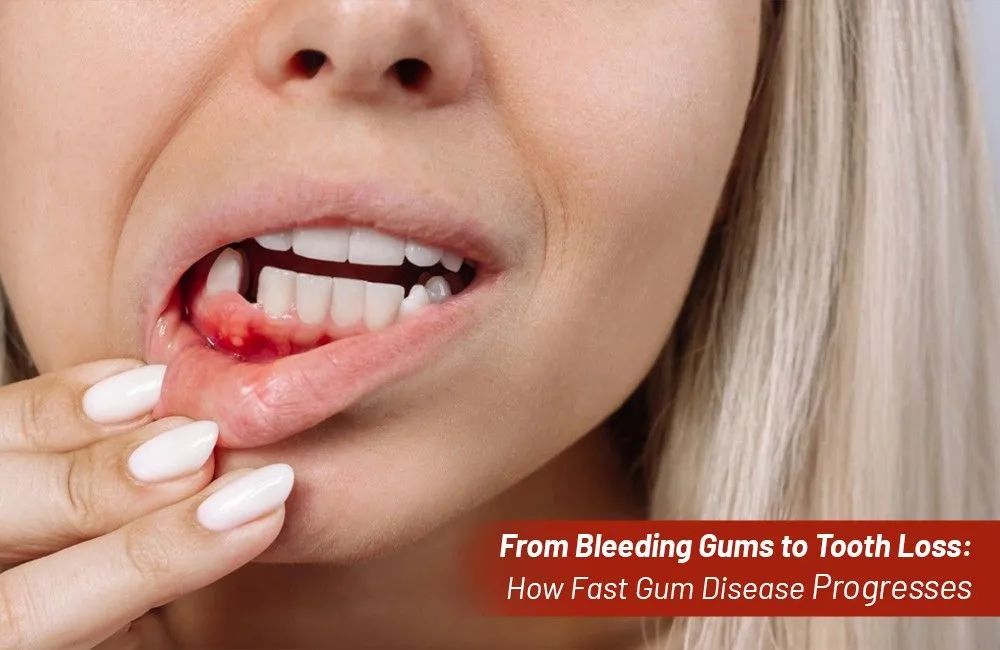
What is it to have bleeding gums? It’s terrible. It could be an indicator of gum disease. A gum disease may not be serious at the beginning but could progress sooner than you think if left untreated. Gum disease is of four stages – Gingivitis, Early Periodontitis, Moderate Periodontitis, and Advanced Periodontitis. Without treatment, it can become a serious issue. If it is addressed during the initial stages, it can be saved from reaching the advanced stages. If you are experiencing bleeding gums, consult a dental clinic in Kochi. Now, we’ll talk about what gum disease is.
What Is Gum Disease?
A gum disease is an infection in your gum tissues and pockets. These tissues hold your teeth in place. Generally, gum disease commences when plaque, a thin layer of bacteria, forms in your gum line. In this first stage, it might not be noticeable at all, meaning many individuals fail to b ecome aware of their development since, in fact, they don’t cause pain. By the time it worsens, it might result in bleeding gums, tooth loss, and other issues.
Stage 1: Gingivitis – The Early Warning Signs
Gingivitis is the first among gum disease stages, and you can reverse it by treating it initially. Common signs include red, swollen gums that bleed easily when brushing or flossing. However, there are no bone losses at this stage. However, the condition can become worse in a couple of weeks. Through regular brushing, flossing, and dental cleaning, the disease can be prevented from worsening. Recognizing gum disease at this point may help prevent its progression to another stage.
Stage 2: Early Periodontitis – When Gums Start to Pull Away
If gingivitis is not treated, it can develop, in a few weeks to months, into early periodontitis. During this phase, your gum starts to recede from your teeth, forming pockets where more bacterias and hardened tartar accumulate. You may experience further swelling and bleeding, bad breath, and soreness or tension in your gum. You may also experience bone loss at this stage; therefore, the disease becomes not fully irreversible at this phase. However, this gum disease can still be managed to prevent further progression through immediate treatment by a dental care periodontist. A periodontic dental care treatment, such as deep cleaning aids in eliminating harmful accumulations to help heal gums.
Stage 3: Moderate Periodontitis – Deeper Damage
At this stage, Moderate periodontitis is a serious form of gum disease during which deeper pockets are created between the gum tissue and teeth, together with substantial bone loss. Recession of the gum is severe in this stage and at times you can notice your teeth feel a little loose. In such a condition, there is no remedy to reverse the effects, but with appropriate care, one can keep the situation under control. Professional periodontal care is required in such a condition. In case of lack of such care, one can expect deterioration of condition. Symptoms of periodontitis are usually not to be ignored.
Stage 4: Advanced Periodontitis – Risk of Tooth Loss
Advanced periodontitis is the severe of gum disease stages. There is a tremendous loss of surrounding bone and tissue around your teeth at this point. The symptoms that may easily point towards this situation are extremely loose teeth, deep pockets around your gums, the emission of pus around your gums, and the pain associated with eating. If care is not provided on an extreme level, you will surely lose your teeth. This particular level is a harsh warning that gum disease is easier to treat when it is caught early, rather than when it is caught late.
How Fast Does It Progress?
Gingivitis may take less than two weeks to occur due to poor oral hygiene. It can become periodontitis in weeks to months if it is neglected. In most cases, gum disease may progress faster than one expects. Over longer periods, the disease can advance to stages where tooth loss becomes a real risk.
How fast does gum disease progress is uncertain because there are many factors involved in it. Genetics, smoking, diabetes, and hygiene practices are the factors that affect gum disease. Always keep in mind that the sooner you treat it, the better.
Prevention & When to See a Dentist
To avoid gum disease, there are very basic things that you should do. You should clean your teeth by brushing them at least two times a day, remove any accumulation of plaque from between your teeth by flossing every day, clean your tongue to remove any bacteria, and visit a dentist periodically. However, if you experience any bleeding gums, swelling, bad taste in mouth, bad breath, or pain, then you should visit a dentist as soon as you can.
Gum disease usually starts silently and can progress to the loss of teeth if left untreated. Though it is a very common disease, it is also very preventable and controllable with regular oral hygiene and professional intervention in time. The difference between healthy gums and damaged ones can depend on how quickly you respond to them. How fast does gum disease progress differ from one individual to another. Spend some time to check your gum health because such an initiative today will ensure healthy gums in the future.
Teethos is a dental clinic in Kochi, committed to assisting patients in attaining and maintaining a healthy, beautiful smile through dental care. The services we offer include general check-ups, prevention, and other highly advanced, restorative, cosmetic dental services.